The Kellogg Creek Student Macroinvertebrate Monitoring Program’s second survey season wrapped up with fantastic results, thanks to the hard work of students, teachers, and volunteers who helped gather this valuable data. We refined our survey approach in the Kellogg Impoundment, expanded the program to several new partner classrooms, and hosted a training for teachers! Data collected by students over the next 3 years will help to establish our baseline macroinvertebrate communities in the Kellogg Impoundment, in front of the dam, and upstream along Kellogg Creek. Future macroinvertebrate data collected after Kellogg Dam is removed and the creek is restored will be compared to the data collected now to see how the macroinvertebrate community has changed, and what that can tell us about how water quality has changed in Kellogg Creek!
A big THANK YOU goes out to:
- Stephanie Rayburn-Tillson and the PACE high school biology students
- Nicole Matthews, Kathleen Fuller and the Milwaukie High School biology and ecology students
- Rachel Hutson, Dylan Richmond, Matt Kemis, Violet Malmros and the Rowe Middle School 6th, 7th and 8th graders
- Shannon Casey and the Portland Waldorf School zoology students
- Entomologist Zee Searles Mazzacano, pHD, CASM Environmental
- Claire Bakke, Stella Scheffer, Ayla Furlow and Zoe Edelman, our Research & Education Assistants from Portland State University and Lewis and Clark
- Educate Ya and IRCO who provided translations and interpreters for the program
- Macroinvertebrate survey volunteers Victoria Worden and Owen Johnson
- Dr. Patrick Edwards, Portland State University



Survey Methods and Analysis
Surveys were conducted at 4 sites: at the confluence of Kellogg Creek and Willamette River, in the Kellogg Impoundment from Dogwood Park and the Milwaukie Presbyterian Church Sanctuary, and upstream of the impoundment behind Rowe Middle School.

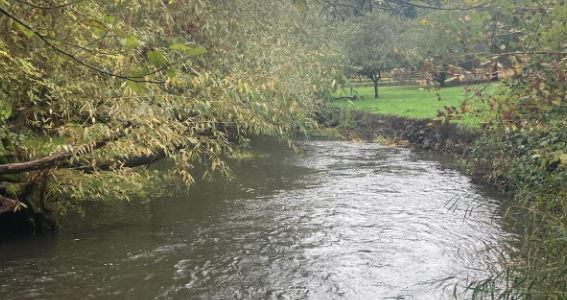


From top to bottom, left to right: The confluence of Kellogg Creek and the Willamette River; Kellogg Impoundment from the Milwaukie Presbyterian Church Sanctuary; Students surveying at Kellogg Creek behind Rowe Middle School; the Kellogg Impoundment from Dogwood Park.
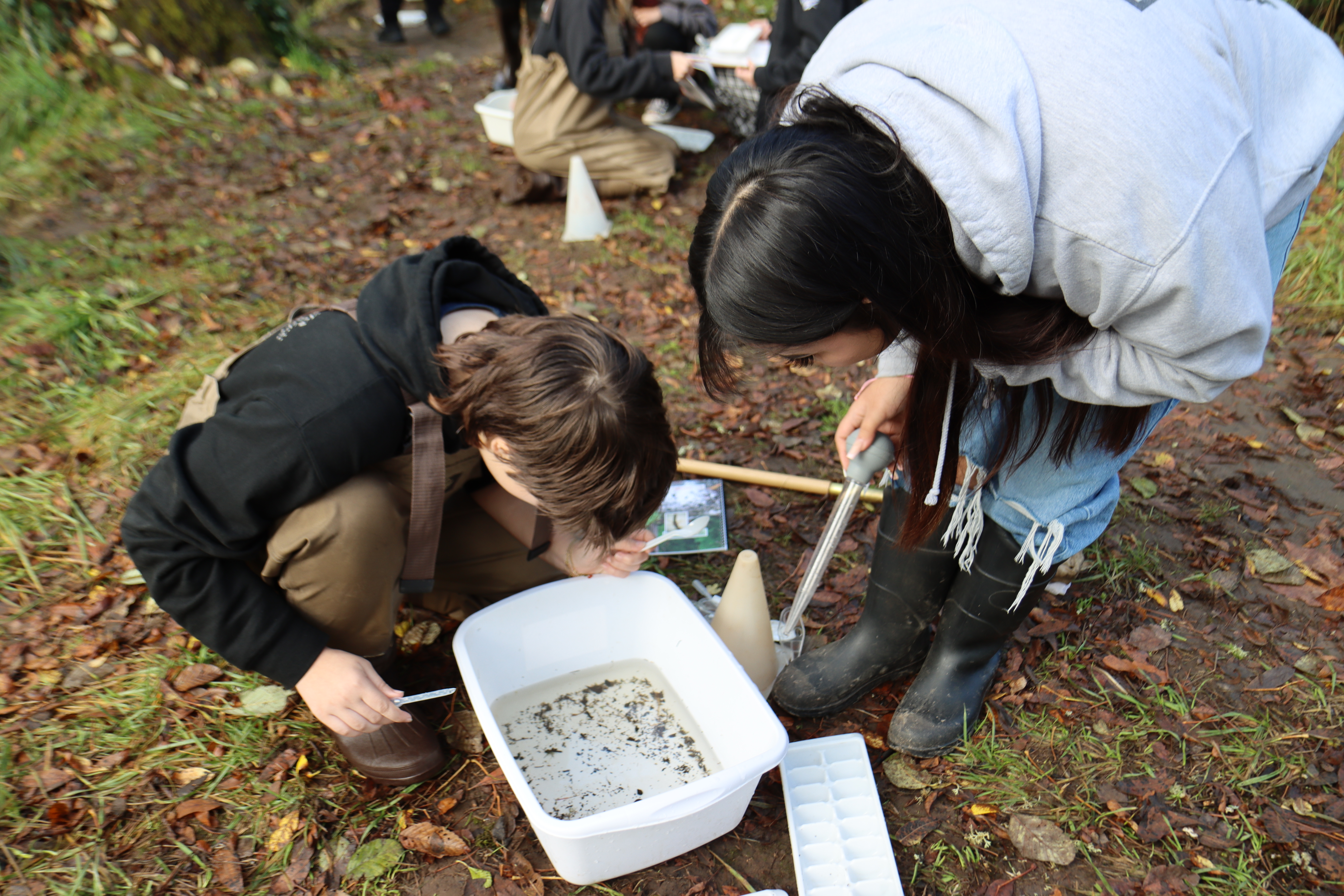
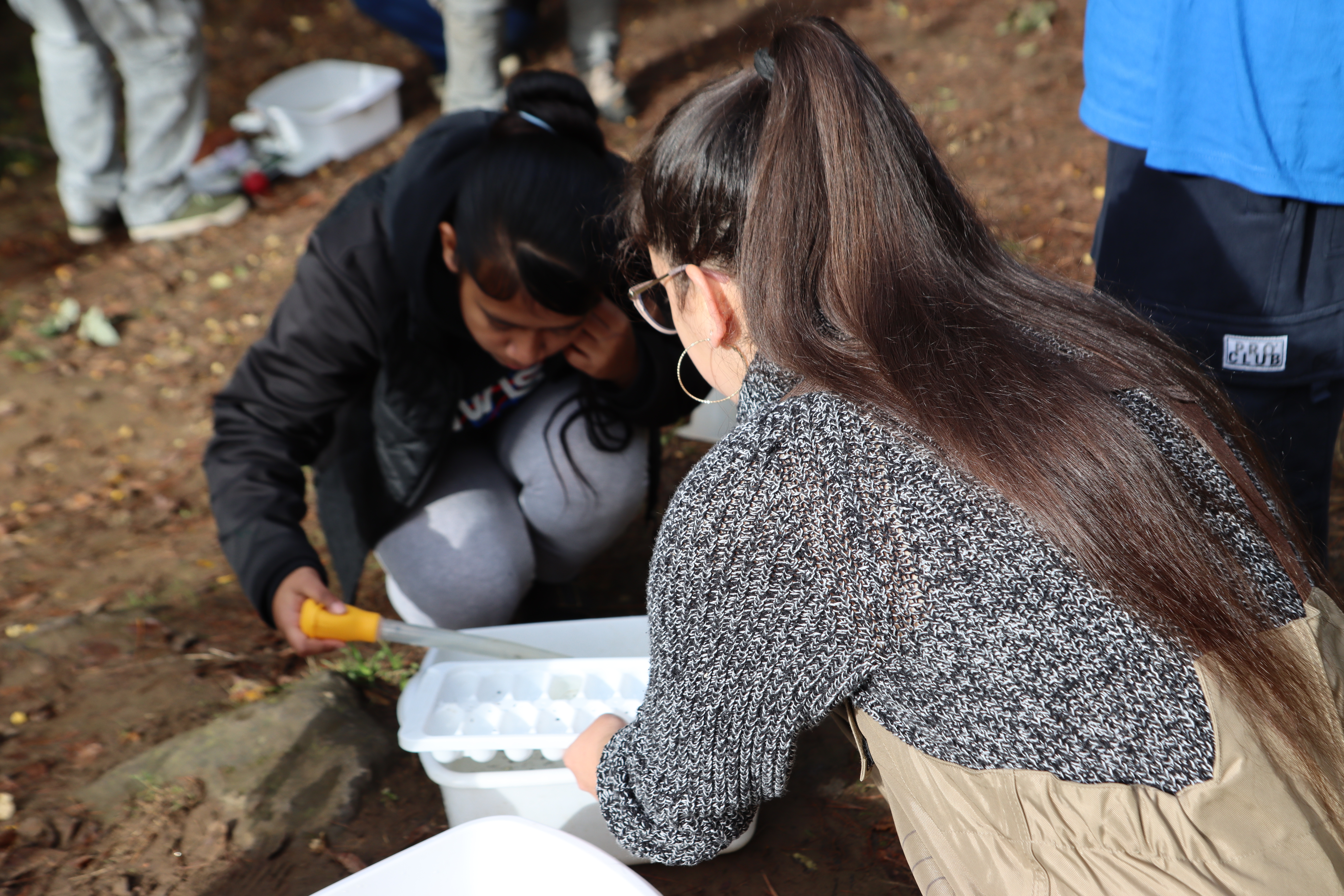
Students collected and identified macroinvertebrates to family level in the field, following non-lethal survey methods developed by Dr. Patrick Edwards (Portland State University). Adaptations to the survey methods were made for surveys in the Kellogg Impoundment, based on recommendations from entomologist Zee Searles Mazzacano (CASM Environmental). Student macroinvertebrate identification was verified in the field by Zee Searles Mazzacano, Peyton Priestman (NCWC), Research & Education Assistants Ayla Furlow, Claire Bakke, Stella Scheffer and Zoe Edelman (Portland State University, Lewis & Clark College) and trained macroinvertebrate survey volunteers Victoria Worden and Owen Johnson .
You can watch a video on Dr. Edwards survey methods, which we used at the Kellogg Creek/ Willamette confluence and Rowe Middle School survey sites.
This video shows survey methods used for sites in the Kellogg Impoundment. Survey methods were adapted because right now, the Kellogg Impoundment doesn’t really look or act much like a creek, which is what Dr. Edwards survey methods are designed for. We use methods that accommodate for the slow-moving water, mucky substrate, and suspended sediment in the water column. In the future, when Kellogg Dam is removed and the creek is restored, we look forward to using Dr. Edwards methods across all of our sites!
Data collected by students was analyzed using a Community Science Index of Biotic Integrity, developed by Dr. Edwards to determine stream health based on macroinvertebrate communities found in the stream. You can read Dr. Edwards full paper describing these methods below:
The Community Science IBI uses 10 metrics to determine the health of a stream based on the macroinvertebrate community found there, for example:
- Taxa Richness: Taxa richness is the number of different macroinvertebrate families detected. This can be a function of diversity, so in general, the greater the taxa richness, the better the health of the stream!
- Mayfly, Stonefly, and Caddisfly Richness: These three metrics have to do with specific orders of macroinvertebrates, the mayflies, stoneflies and caddisflies, that generally tend to be more sensitive to pollution and habitat disturbance. When a stream has lots of families within these orders, it can be a sign of good water quality and stream health!
- Intolerant Richness: This is the number of families found in a creek that are considered sensitive (or intolerant) to pollution and disturbance, including most mayflies, stoneflies and caddisflies.
- % Dominant: Percent dominant calculates the percentage of the top 3 most abundant taxa. This is another method for understanding diversity in a system- if the top 3 taxa found make up a huge percentage of the total, it may be a sign of stream habitat degradation.
Survey Results
Survey Effort
The table below summarizes the number of surveys at each each site, the total number of samples collected at the site, the average number of macroinvertebrates counted during a survey, and the average number of macroinvertebrates counted per number of samples collected. Something that we keep in mind when looking at this seasons data is the amount of “effort” put into each site – how many surveys were at the site and the number of samples that were collected. This fall we had a lot of surveys at Kellogg Creek behind Rowe Middle School, and much less in the impoundment, and creek confluences with the Willamette. When effort is skewed across survey sites, it can make it more difficult to make comparisons between them. With lower sampling effort you may not collect enough samples to fully represent the diversity of a site, and miss some of the more rare taxa that could be present. In future seasons, we will continue to work with teachers and community members to more evenly distribute our survey effort but this data still provides us with a great starting off point for understanding the macroinvertebrate communities and water quality at these sites.
| Survey Sites | Number of Surveys | Number of Samples Collected | Mean Macroinvertebrate Counts | Mean Abundance/Samples Collected |
| Kellogg Creek (Willamette Confluence) | 3 | 32 | 67 | 6.8 |
| Kellogg Impoundment | 3 | 48 | 58 | 2.6 |
| Kellogg Creek (Rowe) | 16 | 365 | 42 | 2.5 |
Survey Findings
The table below summarizes interesting findings from our survey season, including total taxa abundance at each site and which taxa was most abundant. The percentage of mayflies, stoneflies and caddisflies found at each site ( %EPT ) and percent midges. A high percentage of EPT may indicate a healthier stream, whereas over 30 % midges generally indicates a more degraded habitat.
| Survey Site | Taxa Richness | Most Abundant Taxa | % EPT | % Midges |
| Kellogg Creek (Willamette Confluence) | 18 | Sowbug | 1% | 9% |
| Kellogg Impoundment | 10 | Aquatic Worm | 0% | 20% |
| Kellogg Creek (Rowe) | 20 | Scud | 11% | 5% |
Common Macroinvertebrates
We had some macroinvertebrates that were common across several survey sites, including isopods, scuds, and aquatic worms. Notably, all three of our common macroinvertebrates are considered tolerant to poor water quality. Below are brief descriptions of these families and what sites we found them at!

Isopods
We found lots of isopods on our surveys, but the most isopods were found at the confluence of Kellogg Creek and the Willamette River, before Kellogg Dam. Isopods are found in most freshwater habitats, but are most common in shallow, flowing water. We found isopods at every single one of our survey sites!
Scuds
Scuds are common in freshwater habitats and are considered tolerant to habitat disturbance and poor water quality. We found scuds at every single survey site this fall, but they were by far the most abundant at our upstream site behind Rowe Middle School.

Aquatic Worms
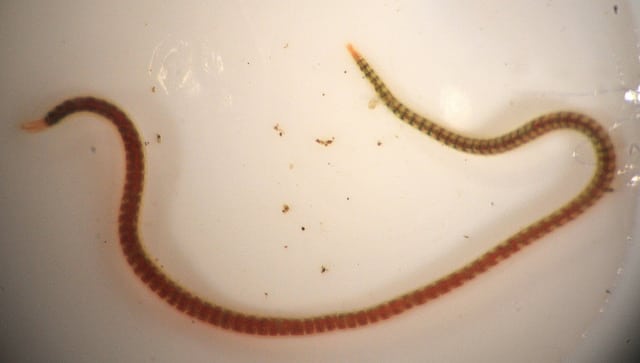
Aquatic worms look just like their terrestrial relatives, but are found in the water! Aquatic worms are common in freshwater habitats and are considered tolerant to habitat disturbance and poor water quality. We found aquatic worms at every survey site this fall.
Less Common Macroinvertebrates
We also had some macroinvertebrates that we only saw a couple of all season, and some that we had never seen on one of our surveys before! Below are brief descriptions of these families and what sites we found them at!
Crane Fly
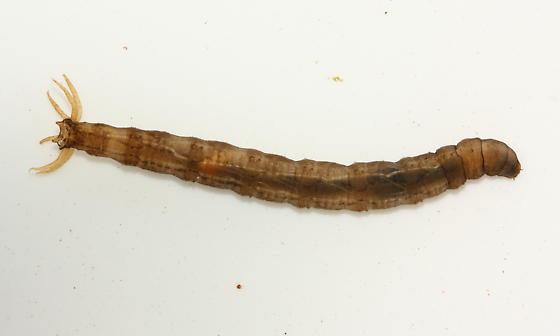
We found our first crane fly at Rowe Middle School this fall! Crane flies can be found in most freshwater habitats and are considered tolerant of poor water quality. Even so, it was cool to document a new family!
Prong Gill Mayfly
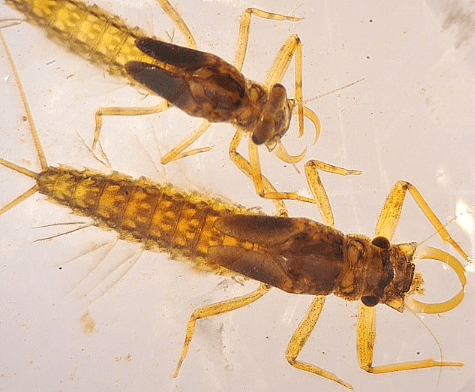
Another first for the Kellogg Creek Student Macroinvertebrate Monitoring Program! We found several prong gilled mayflies in Kellogg Creek behind Rowe Middle School. Prong gilled mayflies are considered moderately tolerant to poor water quality and are found in both flowing and still waters in our region.
Tube Maker Caddisfly
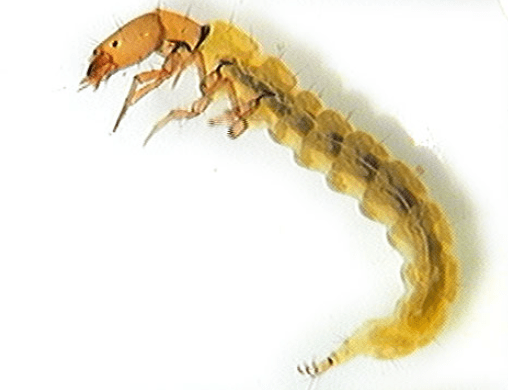
Tube-maker caddisflies are a type of case-less caddisfly found in both flowing and still waters in our region. They are considered moderately tolerant of poor water quality. We found one tube-maker caddisfly all season, at the Kellogg/Willamette confluence site.
Data Analysis
Below are the results of the Community Science Index of Biotic Integrity. On this index higher scores are associated with healthier streams, so the sites that are represented in red are considered impaired, while the green and yellow sites are healthy and moderately impaired respectively.
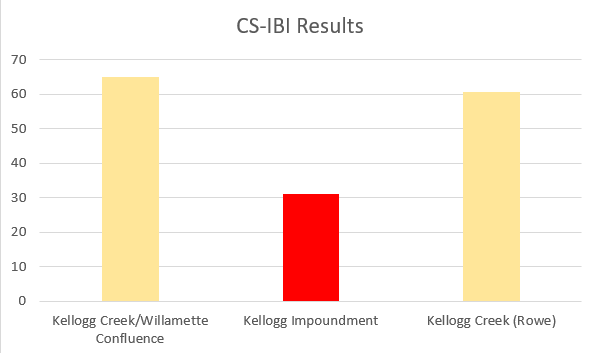
Looking at the results of the CS-IBI scores, combined with an analysis of the percent of EPT taxa, and percentage of midges, we can start to get a pretty good idea of the health of Kellogg Creek at these sites. The site most directly impacted by the Kellogg Dam in the Kellogg Impoundment, where the creek is is fairly stagnant and shallow, there’s high amounts of sediment that has accumulated, and warmer water temperatures compared to other sites. The CS-IBI score for sites in the Kellogg Impoundment was 31, which indicates that the stream is impaired (poor water quality and degraded habitat). It is important to note that the CS-IBI was specifically designed for determining stream health in free-flowing systems and may overestimate impairment in habitats such as the Kellogg Impoundment. With this in mind, we can also consider the percent EPT taxa, which was zero at Impoundment sites, and the percentage of midges which was 20%, which aligns with the idea that the Kellogg Impoundment is impaired or at least moderately impaired.
At the Kellogg Creek and Willamette confluence, the CS-IBI score (65) indicated that the creek was moderately impaired. This site is located just in front of the dam, and therefore may be impacted by warmer water temperatures from the Impoundment, and changes in stream flow. In the spring, CS-IBI results showed that this site was impaired, so this marks a change in reported condition at the site which may be attributed to the increase in surveys at this site, the time of year, or some other factor.
Upstream of the impoundment, behind Rowe Middle School, macroinvertebrate communities were representative of an moderately impaired, or slightly unhealthy, stream. We found the the highest percentage of EPT taxa (11%) at this site, which aligns with the CS-IBI assessment that the stream is moderately impaired. This site acts as control site for our monitoring- since it is not directly impacted by the Kellogg Dam, we can get a good idea of what macroinvertebrate communities are present in Kellogg Creek, and compare that to what we find in the parts of Kellogg Creek impacted by the dam. In the spring, CS-IBI results showed that this site was unimpaired, so these results show a change in the stream condition that may be attributed to the increase in surveys, the time of year, or some other factor.
We are looking forward to continuing our surveys this spring, and seeing how things have changed, or stayed the same, throughout the seasons and a full year after our Spring 2024 Pilot Season!
 ncwatersheds.org