


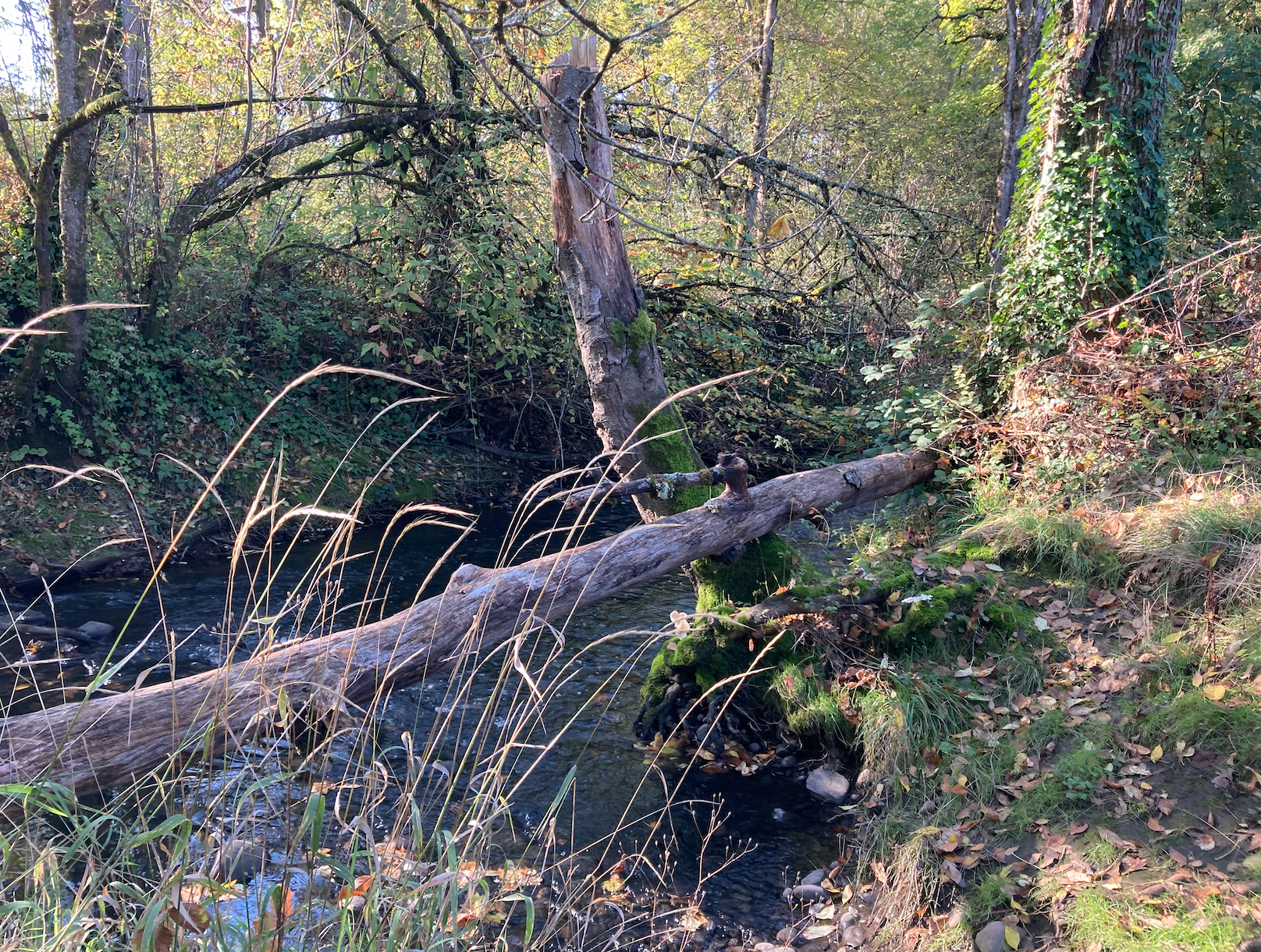
Large woody debris, like the fallen trees and logs you can see in the picture above, may appear to be just extra junk in a stream but it is actually super critical to stream health! In fact, installing large wood back into rivers and streams is a big component of most of our restoration projects. We even have an annual program where we collect Christmas trees at the end of each holiday season and with the help of volunteers install them in the river at Spring Park!
Large wood occurs naturally in waterways for a variety of reasons, it could be a tree that fell down during a big storm or because the stream bank under it eroded, or more dramatically, landslides can deposit large amounts of woody debris in a small amount of time. Traditionally, large wood has been removed from streams when this happens, often due to some common misconceptions around its presence being hazardous, unattractive, or bad for the stream. So let’s dive into what the benefits of large wood is for streams, and why it’s important to keep it (or in our case place it) there!
- Helps slow down water flow. This can be good for a quite few reasons. When water slows down, it allows for more sediment to drop out of the water column, and reduced the amount of erosion along the stream banks. It also creates a refuge for fish and other aquatic animals during high flow events.
- Adds shade to help keep water temperatures cool. This is super important for our native cold water-dependent species such as salmon!
- Provides shelter for fish from predators. Large woody debris in streams can provide fish, and other aquatic animals with the perfect place to hide!
- Attracts insects that fish like to eat. Algae, leaf litter, and other organic material associated with large woody debris helps to attract aquatic macroinvertebrates, like mayflies, stoneflies and caddisflies, for fish to eat, which in turn supports a greater diversity of fish!
- Exposed wood creates basking habitat for reptiles. Native turtles, like the Western pond turtle and the Western painted turtle, rely on basking habitat to help regulate their body temperatures.
- Helps to reconnect waterways with the natural floodplain. During high flow events, large wood can help to redirect water into the natural floodplain, which reduces the risk of flooding downstream in areas that can’t handle high flows.
Those are some of the big benefits of large wood in streams, but if you think of others that are important to you, let us know in the comment section! And if you would like to learn more about our restoration work, head to the Watersheds Restoration Projects page on our website!
 ncwatersheds.org